
My Second Brain is OpenClaw + Custom Tools

My Second Brain is OpenClaw + Custom Tools
FEBRUARY 11, 2026
At any given time I'm running fifteen projects. Client work, open-source tools, side projects, personal apps. I don't have a product manager. I don't have a project coordinator. I don't have a scrum master or a sprint planner or someone whose job it is to know where everything stands. What I have is OpenClaw and a custom tool to keep token use down and accuracy up. And it's kinda amazing.

OpenClaw is the point man in the operation. Its job isn't to assist me with project management — it is the project management team. The goal from day one was to replace the entire layer of coordination that normally requires multiple people: the PM who tracks priorities, the coordinator who knows which projects are stalling, the person who writes the status updates and flags the risks before they become fires.
Let's face it. UI people think they are developers. Developers think they are product managers. Every project manager thinks they can deliver an app to an audience. It's an interesting time. The good news for me is I've had all of those jobs before. So how can I replicate "me".
After twenty-five years building products for everyone from large corporations to blockchain startups, I've accumulated a lot of plates to keep spinning. The traditional approach would be to hire help or to surrender to the chaos. I chose a third option: build a system that handles all of it, runs locally on my machine, and shows up every morning ready to brief me.
The Daily Standup
Every morning starts the same way. I sit down, open my PM tool and my OpenClaw platform, and run a standup. Not a fifteen-minute Zoom with half-engaged people staring at their phones. A focused, two-minute review of exactly where everything stands across all fifteen projects.
OpenClaw has already done the work. Overnight it pulled commits from GitHub, synced tasks from my PM tool, checked calendar events, reviewed milestone timelines, and written standup notes for every active project. By the time I open the brief, it's all there. What shipped yesterday. What's blocked. What needs my attention right now. Which projects are healthy and which ones are quietly drifting.
That daily standup with my OpenClaw platform and my PM tool makes each work day a lot easier and focused. I stop context-switching between five apps trying to reconstruct what's happening, and I start building.
It's the most productive meeting on my calendar, and no one else is in it.
Replacing the Whole Team
When people hear "AI project management" they picture a chatbot that generates to-do lists. That's not what this is. OpenClaw operates as a full replacement for the coordination layer that product teams rely on.
It writes the status updates. Every project gets a daily standup note that summarizes recent commits, open tasks, and upcoming deadlines. These aren't templates with blanks filled in. They're contextual summaries that understand the project's trajectory and flag what actually matters.
It manages the milestones. The agent tracks commit velocity against target dates and recommends adjustments when reality diverges from the plan. It writes these suggestions with a clear AI attribution so I always know the difference between what I set and what the system recommended.
It catches what I miss. Fifteen projects is too many for any one person to hold in their head. When a project goes quiet for a week while a milestone approaches, OpenClaw flags it. When my stated priorities don't match my actual commit patterns, it calls that out in the morning journal. When tasks don't map to any registered project, it surfaces the anomaly.
It keeps institutional memory. Six months from now when I question a technical decision, the reasoning is already recorded — not just what was decided, but what alternatives were considered and what assumptions drove the choice. That's the kind of context that normally lives in someone's head and walks out the door when they leave.
How the System Works
The foundation is a local Next.js app backed by SQLite running in WAL mode. No cloud dependency. No cold starts. No data leaving my machine unless I explicitly choose to share it. Everything lives in a single database file that I can back up, restore, or query directly when I need to debug something.
The mechanical stuff is handled by cron jobs. GitHub commits sync four times a day. Task sync runs every thirty minutes. RSS feeds refresh twice a day. None of this burns a single AI token. The data just appears in the database, ready for both the UI and the agent to consume.
OpenClaw runs Claude Opus 4.6 as its reasoning engine and handles everything that requires actual judgment: writing standups, drafting journal entries that connect themes across projects, adjusting milestones, detecting risks. A reference file tells the agent exactly what endpoints exist and what's its responsibility. It reads the contract, calls the APIs, and moves on. No wasted tokens discovering the system.
The entire system runs on localhost. Your commits, task titles, journal entries, standup notes — none of it leaves the machine. In an era where even simple tools want to phone home, keeping everything local means queries return in microseconds and the morning brief loads in under a second.
Why Opus Is the Brain
A project management agent is only as good as its reasoning engine. OpenClaw provides the body — the integrations, the memory, the always-on runtime. Claude Opus provides the brain. And the gap between Opus and everything else is the difference between a tool that generates passable drafts and one that produces genuinely useful output.
Opus 4.6 was built for agentic work. It plans more carefully than any previous model, sustains focus across extended multi-step operations, and catches its own mistakes. In Anthropic's own testing, Opus autonomously managed a roughly 50-person organization across 6 repositories in a single day — closing issues, assigning work, making product decisions while synthesizing context across multiple domains. That's not a coding demo. That's project management.
The million-token context window means Opus can hold an entire project's worth of context in a single session. And the effort tuning makes a 24/7 agent economically viable — not every task requires maximum reasoning. A quick status ping runs at low effort. A complex risk assessment runs at full power. At medium effort, Opus matches previous-generation performance while using 76% fewer output tokens.
Building the Next Layer: Coding Flow
The PM layer is working. Fifteen projects, one agent, zero dropped balls. But project management is only half the equation. Knowing what to work on doesn't help if switching between projects still means twenty minutes of orientation before you can write a line of code.
So now we're building additional capabilities to enable better coding flow across those projects. The idea is to extend OpenClaw's awareness from "what needs to happen" into "here's the exact context you need to start working on it right now." Architecture decisions, recent patterns, open pull requests, relevant test coverage, the state of the branch you left mid-thought three days ago.
When you're moving between fifteen codebases, the context switch tax is real. The goal is to eliminate it — to make sitting down on any project feel like you never left, because the system has already assembled everything you need and is ready to hand it to you.
The PM layer tells me what to work on. The coding flow layer will tell me exactly where I left off and what the code needs next. Together, they're a complete replacement for the team I never hired.
Why This Beats Everything Else
Traditional PM tools like Jira and Asana are databases with dashboards. They store data and display it. They don't reason about it, they don't proactively surface insights, and they don't draft your status updates.
AI-native tools like Linear's AI features are impressive but constrained — walled gardens tied to a single platform's data, with limited model choice and no ability to operate autonomously across your entire toolchain.
General-purpose AI assistants lack persistence, can't take actions, and forget everything between sessions. You're burning tokens just to get the agent back up to speed.
This system is different because it combines autonomous operation with full integration, persistent context, and local control. OpenClaw provides the runtime. Opus provides the reasoning. The custom layer encodes my actual workflow instead of forcing me into someone else's methodology. And it runs on my machine, with my data, under my control.
The Compound Effect
When OpenClaw writes a standup today, that standup becomes context for tomorrow's journal. Tomorrow's journal informs next week's milestone review. The institutional knowledge doesn't decay. It stacks. Every day the system knows more about my projects, my patterns, and my priorities than it did the day before.
Fifteen projects used to mean fifteen context switches, fifteen mental models to reconstruct, fifteen sets of priorities competing for the same limited attention. Now it means one standup, one brief, one clear picture of what matters today.
The future of project management isn't a better dashboard. It's a better brain. One that never takes a day off, never loses context, and gets measurably better every week.
I'm not managing fifteen projects through heroic effort or obsessive discipline. I'm managing them because OpenClaw does the work of an entire PM team, and all I have to do is show up to our morning standup and start building.

MidJourney vs Local FLUX
I've recently implemented FLUX dev locally, allowing me to generate top-tier AI images without relying on third-party servers. This setup ensures enhanced privacy, complete control, and eliminates API costs.

OpenAI 4o Image Gen is Superior to All Others (*)
Except when their lawyers restrict what the technology can actually do. Other than that, it's AMAZING and the leader in the clubhouse.
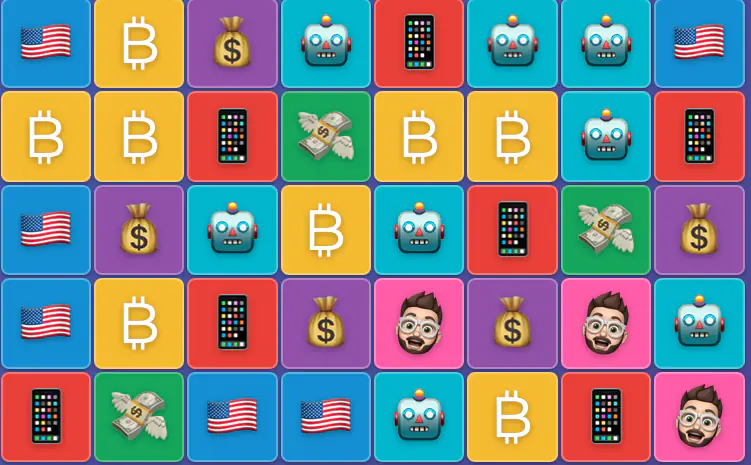
Jewel Game
Play a fun match-3 game. Match money bags, bitcoins, robots, phones and more. Compete for high scores!
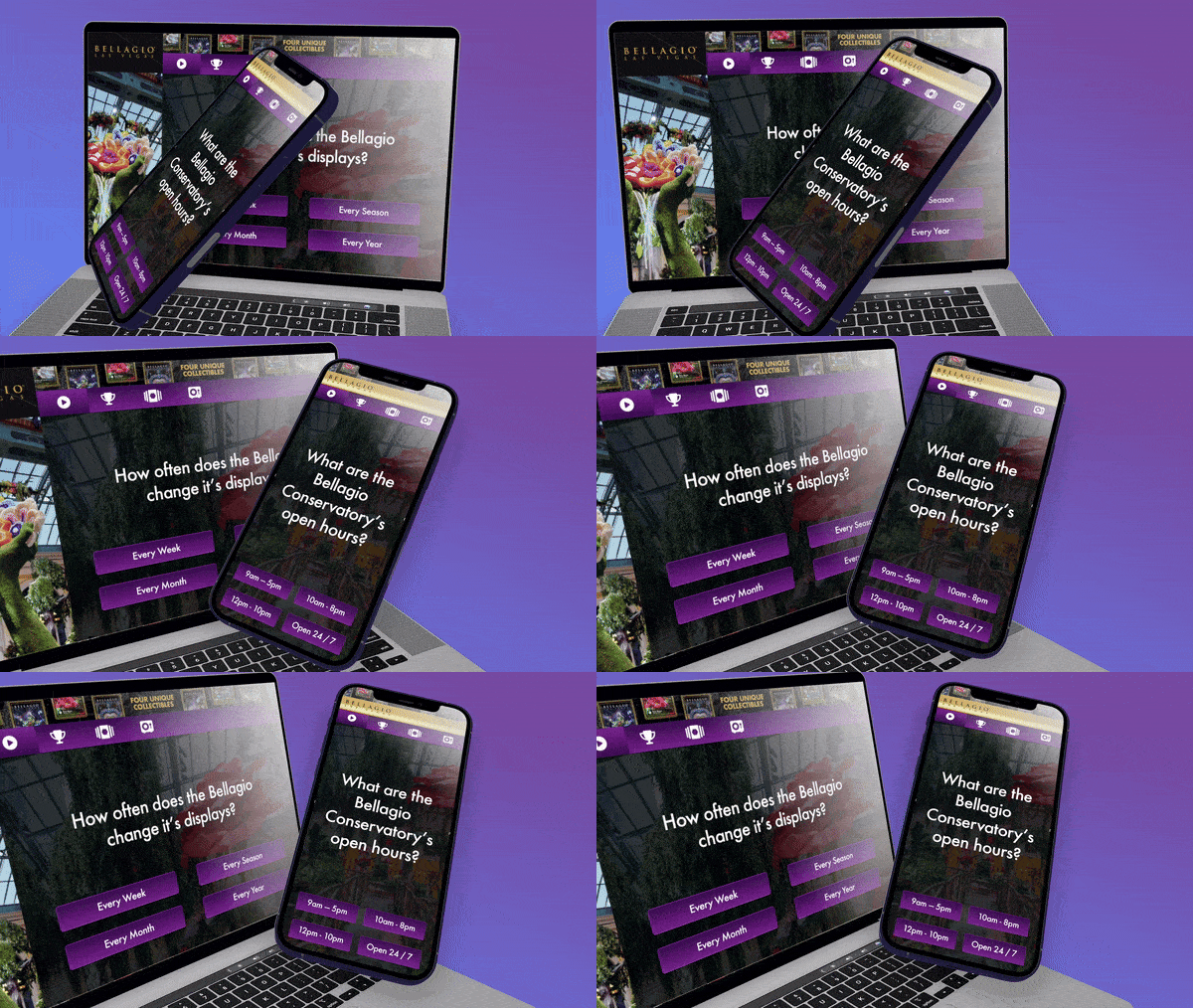
The Bellagio Conservatory
Explore a proposal for how Bellagio Conservatory could leverage digital engagement and NFTs to enrich visitor experiences, distribute foot traffic, gather insightful data, and offer unique digital rewards.

Quantum Computing Is Even More Mindboggling
Dive into the world of quantum computing with insights from IBM's cutting-edge research facility. Understand the potential breakthroughs and the emerging quantum arms race shaping our technological future.