
OpenClaw Runs My Business For Real

OpenClaw Runs My Business For Real
FEBRUARY 23, 2026
I have a ton of projects I've always wanted to build. Clients I've wanted to serve. I am one person. So I built a staff.
The lead Claw runs on OpenClaw — the open-source framework that lets language models operate as persistent employees instead of one-off chatbots. It reads email, checks calendars, posts to social media, generates images, produces videos, writes code, and delivers a morning briefing at 8 a.m. It does most of this without being asked.
The system runs across several Macs. One handles orchestration and the dashboard. The others run open-source models locally for tasks that don't justify a cloud API call. Summarizing a webpage, checking headlines, reformatting text — all of that stays in-network and costs nothing. For the work that actually requires reasoning, the lead Claw uses Claude Opus 4. Offloading the commodity tasks to local models saves roughly 90 percent on API costs compared to running everything through a frontier model.
What it actually does
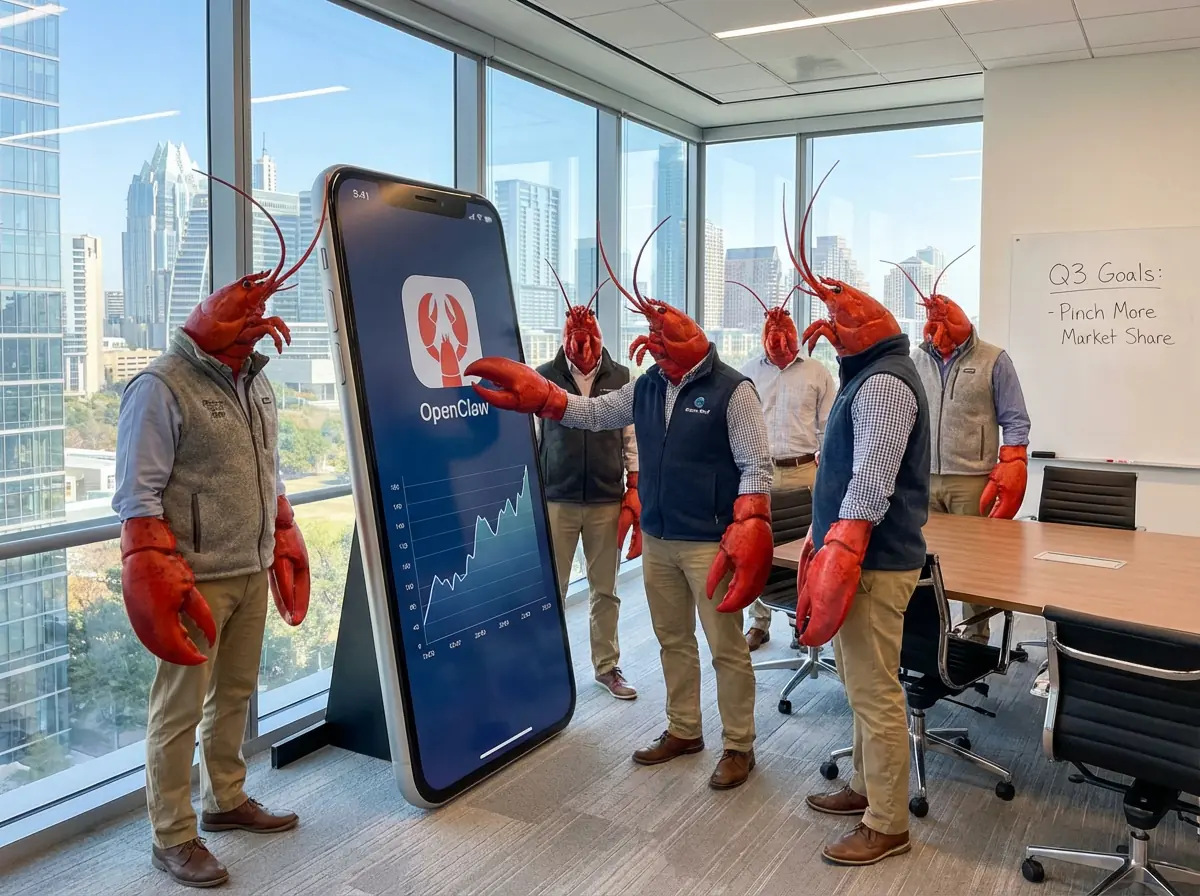
A Next.js dashboard backed by SQLite serves as mission control. It pulls GitHub commits automatically, syncs tasks from Things 3 every half hour, aggregates RSS feeds, tracks weight loss data, and stores journal entries. The lead Claw reads from all of it and writes to most of it. The morning brief assembles itself from this data. There's a trend to do away with software conventions like dashboards, but I think the structure keeps things familiar and moving.
Social media posts draft through the dashboard API — Twitter/X and Bluesky, each project gets its own linked accounts, everything goes through an approval step. Image generation runs two pipelines: one for structured prompt-to-image batches, one through a SubAgent workflow for iterating on visuals without leaving the conversation. Video production went live in late February using Remotion, a React-based framework that the SubAgents can drive programmatically.
Coding runs through a structured multi-agent system that dispatches specialized SubAgents — one for planning, one for testing, one for review. Git worktrees keep feature branches isolated. The approach saves around 85 percent on tokens compared to having a single model write everything in one long session.
Web research works the same way. The Claw fetches pages, strips them down, and passes the content to a local model for summarization. The orchestration model never processes the raw text.
The team
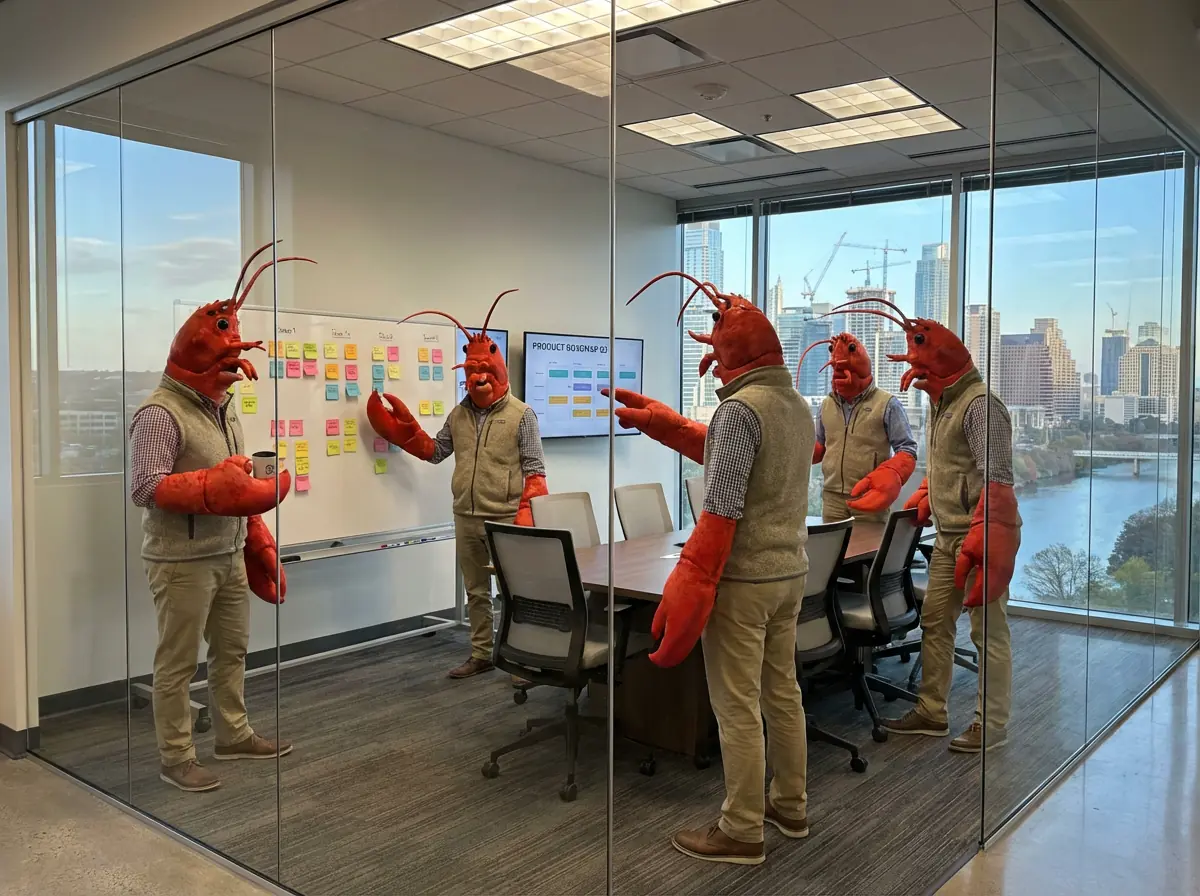
The lead Claw is one of five. The others handle revenue and sales strategy, marketing and go-to-market, engineering architecture, and community engagement. Each has its own workspace, memory files, and identity. They store their work in the same dashboard, tagged by project.
The schedule
Morning brief at 8 a.m. Weekly weigh-in reminder on Saturdays. Heartbeat checks every hour, scanning for anything that needs attention. A proactive overnight coding session is planned but not yet live — pending better reliability from the coding pipeline.
Why it matters
This isn't a demo. It runs production workflows for a solo developer shipping products and operates profitably. The local model routing, the structured coding SubAgents, the social posting pipeline, the video generation — every piece exists because one person needed to do the work of several and didn't want to pay cloud rates for all of it.

Whether that bet pays off long-term is still an open question. But the infrastructure is live, and it works at 3 a.m. without supervision.

HiDream-I1 AI: Speed and Price Advantage
Exploring HiDream-I1 AI's cutting-edge capabilities for state-of-the-art image generation across multiple styles and applications.

Ship Week: Two Fresh AI Launches
It's Ship Week — launching Candidate-in-a-Box and Kōchi v1.5. Building, shipping, iterating. Every week.
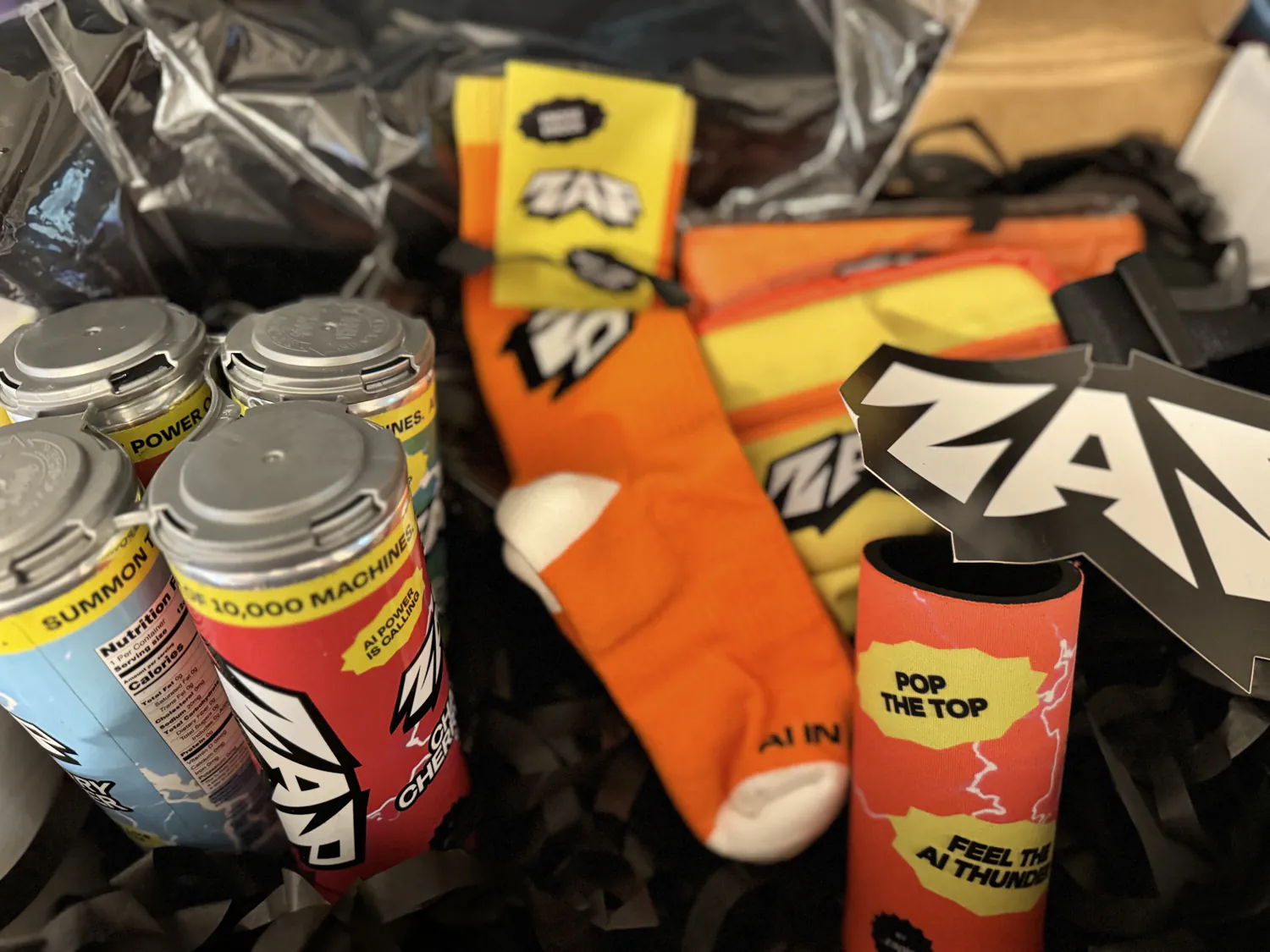
Ummm ... Thank You Zapier?
I received a box filled with branded swag from Zapier today. Such a fun campaign to promote their Zaps! and new AI enhanced capabilities.

My Design in Pop Culture
16 years ago I got an opportunity to completely rebuild and redesign one of the most famous movie sites on the Internet. With over 30,000 articles at that time and hundreds of thousands of community members, it was a juggernaut. Because of it's notoriety, the site was spoofed in pop culture.
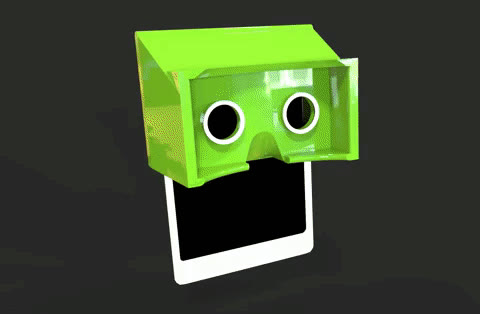
TogglesVR
We love VR. We love everything about the ability to put a VR headset onto our head and be transported to another place. The problem is that strapping gear to a customer’s head or giving them an interface with no way to interact with them (classic Google Cardboard issue) requires a level of commitment that not all people are prepared to do.