
When Time Magazine Misses the Point About AI
When Time Magazine Misses the Point About AI
DECEMBER 12, 2025
When Time Magazine Misses the Point About AI
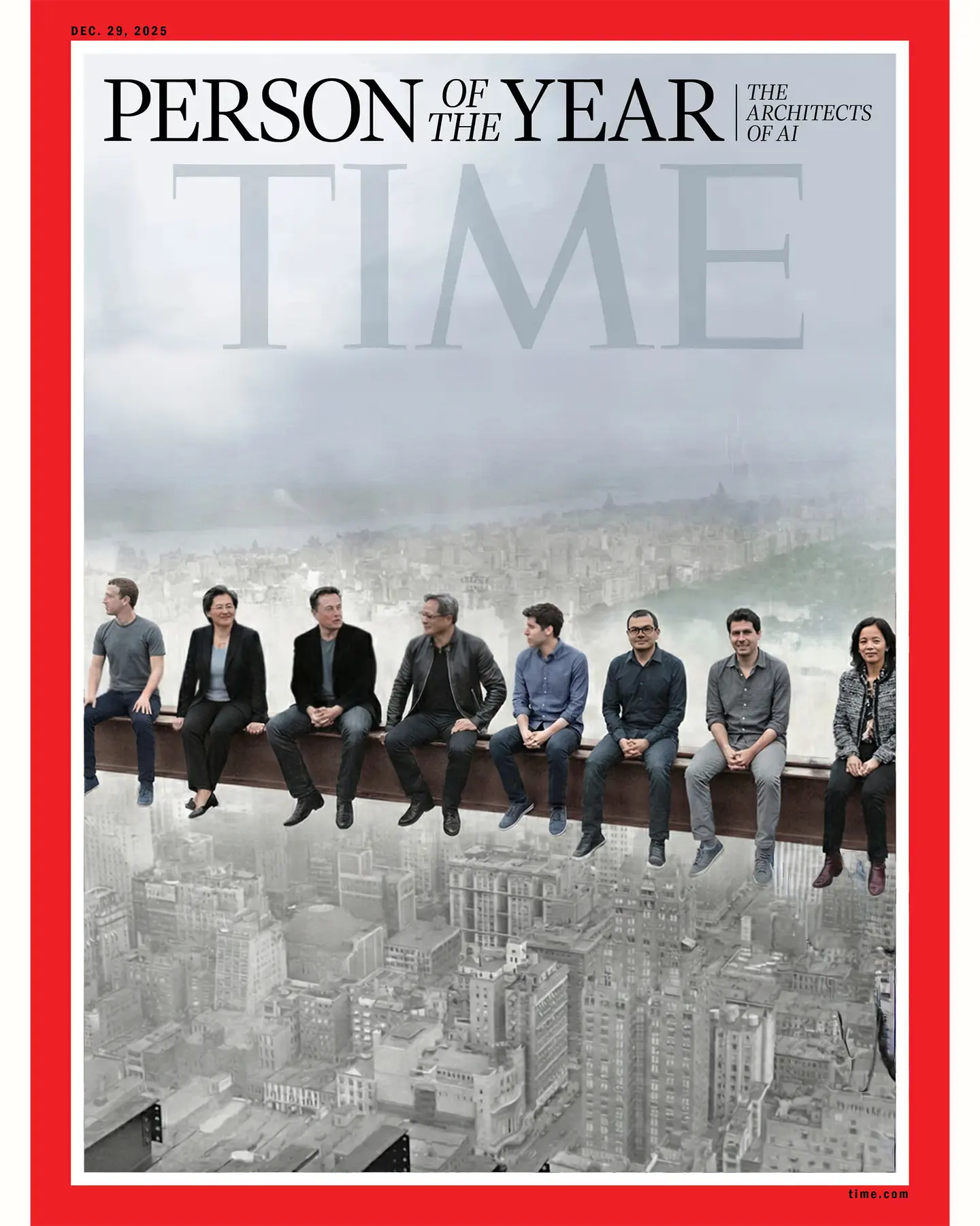
Time Magazine just named "The Architects of AI" as their 2025 Person of the Year. A bold choice for a transformative technology that's reshaping how we work, create, and think. The recognition is deserved—these are the architects of a revolution.
But then I saw the cover art.
The Disappointment
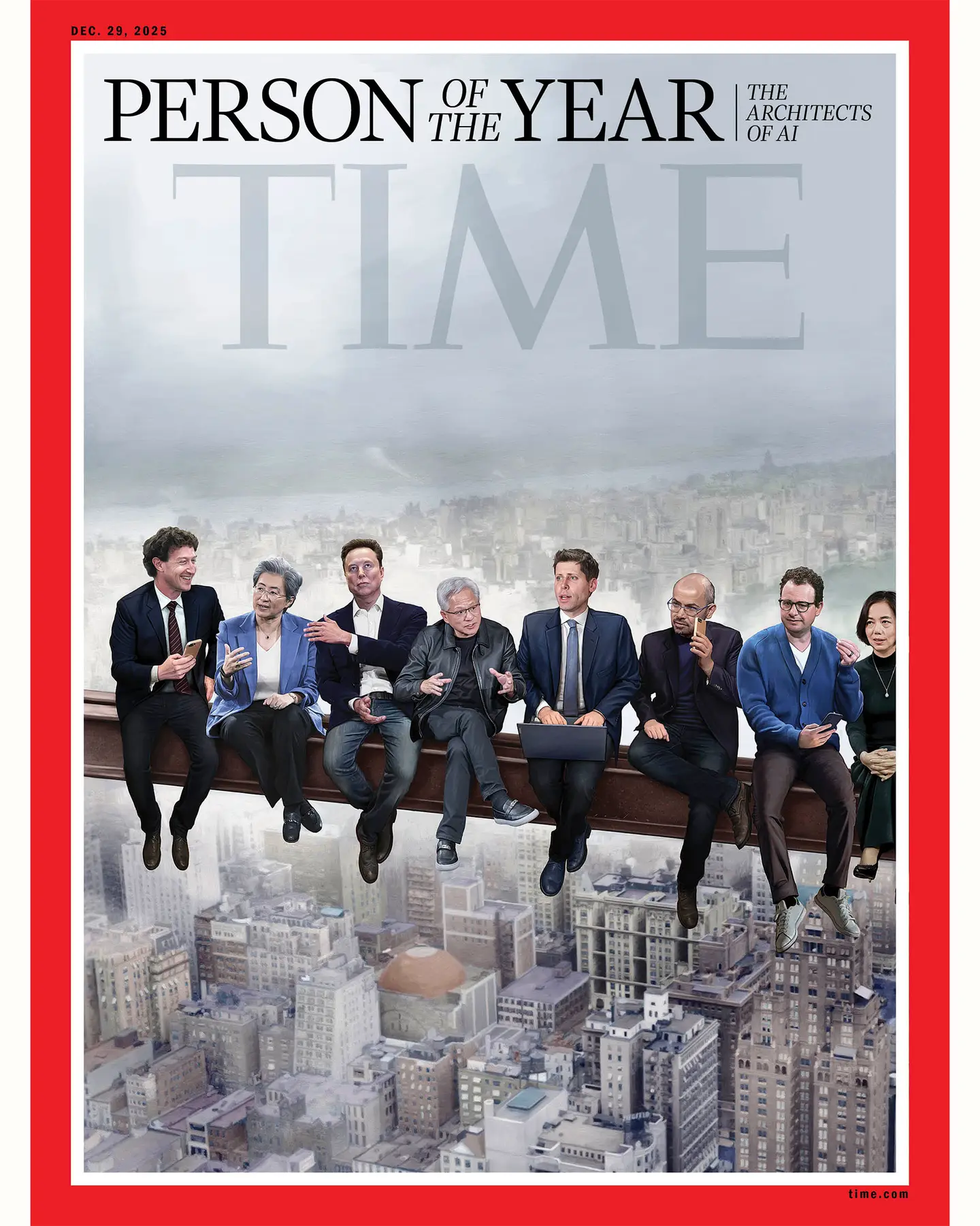
My first reaction? This looks like bad Terrance and Phillip South Park design cutouts. Flat. Lifeless. Like someone took professional headshots, ran them through a basic compositing tool, and called it a day. These are the leaders who've built the most powerful creative technology in human history, and Time gave them a cover that looks like it was assembled in PowerPoint.
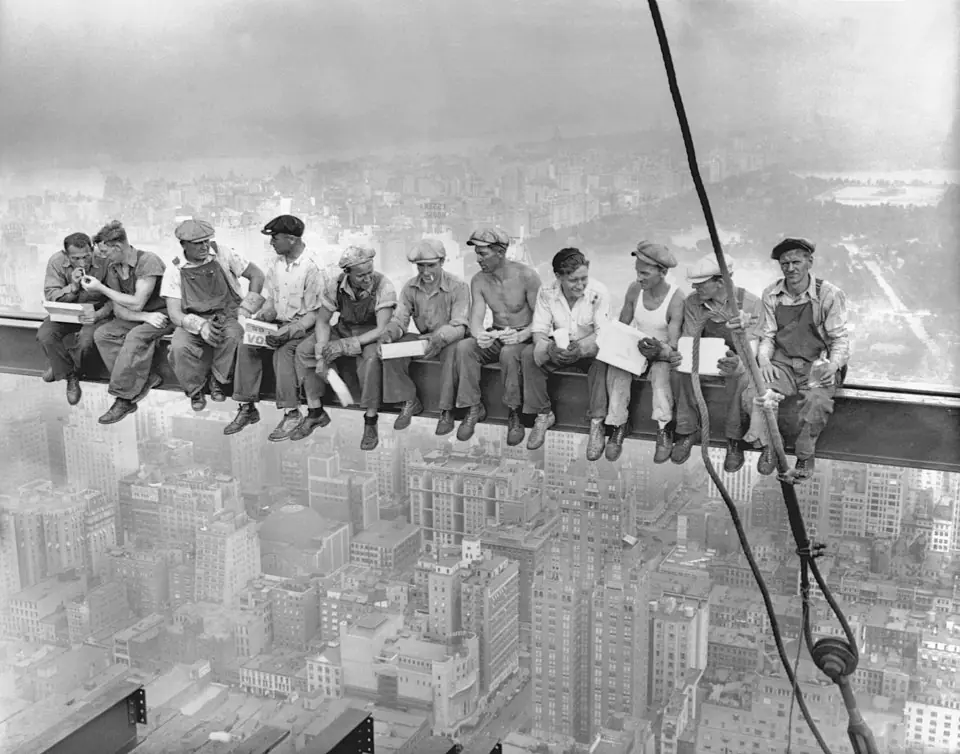
The concept had potential—echoing the iconic "Lunch atop a Skyscraper" photo from 1932, with tech leaders perched on a beam above the city. It's a powerful visual metaphor: modern innovators building the future, literally sitting on top of the world they're creating.
But the execution? It felt phoned in. Low effort. The kind of thing you produce when you understand the assignment but don't truly grasp the tool.
Twenty Seconds Later
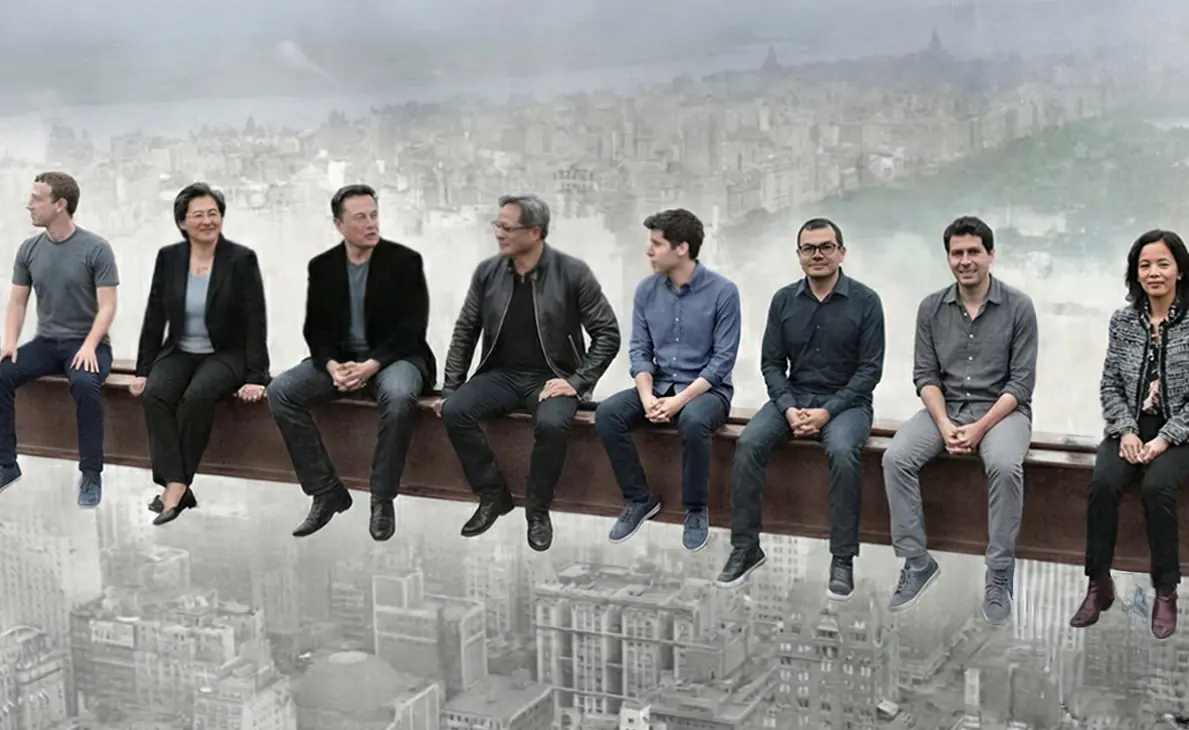
So I fired up an AI image generator and spent twenty seconds crafting a prompt. Not twenty minutes. Not twenty hours. Twenty seconds.
Look at that. The lighting is cohesive. The perspective makes sense. The figures look like they actually belong in the scene rather than being pasted on top of it. It's not perfect—no AI generation is—but it's immediately more compelling than what one of the world's most prestigious magazines managed to produce.
And here's the kicker: this took me less time than it would to order a coffee.
The Art of the Prompt
Here's what Time Magazine—and honestly, most people—don't fully realize yet: AI image generation isn't about pushing a button and getting magic. It's still an artistic endeavor. The difference is that we've exchanged our mouse for words to drive the design.
A bad prompt gets you bad results. A generic prompt gets you generic results. But a thoughtful prompt—one that considers composition, lighting, mood, style, and context—can produce something remarkable. The skill isn't gone. It's just transformed.
When I crafted that prompt, I thought about:
- The photographic style of the 1932 original—documentary realism with atmospheric depth
- Natural integration of subjects into the scene—no harsh cutout edges
- Atmospheric perspective—depth and distance matter
- Body language—casual but confident, like the original construction workers
- Historical weight—making it feel like a moment that matters
Those considerations don't happen by accident. They're the result of understanding both the medium and the message. And that's exactly what feels missing from Time's execution.
The Irony
There's something deeply ironic about a major publication celebrating AI leadership with art that suggests they don't fully grasp the technology they're honoring. It's like writing an article about the future of space travel while still drawing rockets with crayons.
These AI leaders—Sam Altman, Demis Hassabis, Jensen Huang, Dario Amodei, and the others—have created tools that are democratizing creativity at an unprecedented scale. Anyone with access to these tools can now produce professional-grade visual content. The barrier to entry isn't gone, but it's dramatically lower. What matters now is vision and skill in articulation.
Time had access to the same tools. Probably better ones. Certainly a bigger budget. And yet they produced something that looks like a first draft while celebrating the final frontier.
Better Prompts, Better Results
The real lesson here isn't that AI makes everything easy. It's that AI makes skill more visible. A photographer with decades of experience will get dramatically different results from the same AI tool than a novice because they understand composition, lighting, and storytelling. The tool amplifies expertise—it doesn't replace it.
When I see that Time cover, I don't see a limitation of the technology. I see a limitation of execution. Someone made choices—about composition, about process, about effort—and those choices resulted in something that undersells both the subject and the medium.
We're at a weird inflection point in creative technology. For the first time in history, the tools of professional creation are accessible to everyone. But mastery still matters. Understanding still matters. Care still matters.
The mouse hasn't disappeared. It's just become a keyboard. And the artists who learn to write compelling prompts will be the ones who produce compelling work.
The Future Is Here
Time Magazine was right to recognize AI leaders as the people of the year. They've fundamentally changed how we interact with technology and creativity. But the cover should have demonstrated that power, not just acknowledged it.
Twenty seconds. That's all it took to show what's possible when you understand both the tool and the craft. Imagine what these publications could produce if they leaned into these capabilities with real intention.
The future of creative work isn't about AI replacing human creativity. It's about human creativity learning to speak a new language. And like any language, fluency requires practice, thought, and care.
Time celebrated the architects of this revolution. They just forgot to use their blueprints.
MidYear Generative Images
We are almost at the mid 2024 point and I wanted to take a look at generated images and the states of the art when it comes to half a dozen services. I evaluated MidJourney, OpenAI (DallE), DaVinci, Leonardo AI, Adobe Firefly, Stable Diffusion. I passed in the exact same prompt into all of them and you can see the results.
LM Studio Puts AI On Your Laptop
Diving into LM Studio and its powerful local functionalities on your own home computer.
The End of Spatial
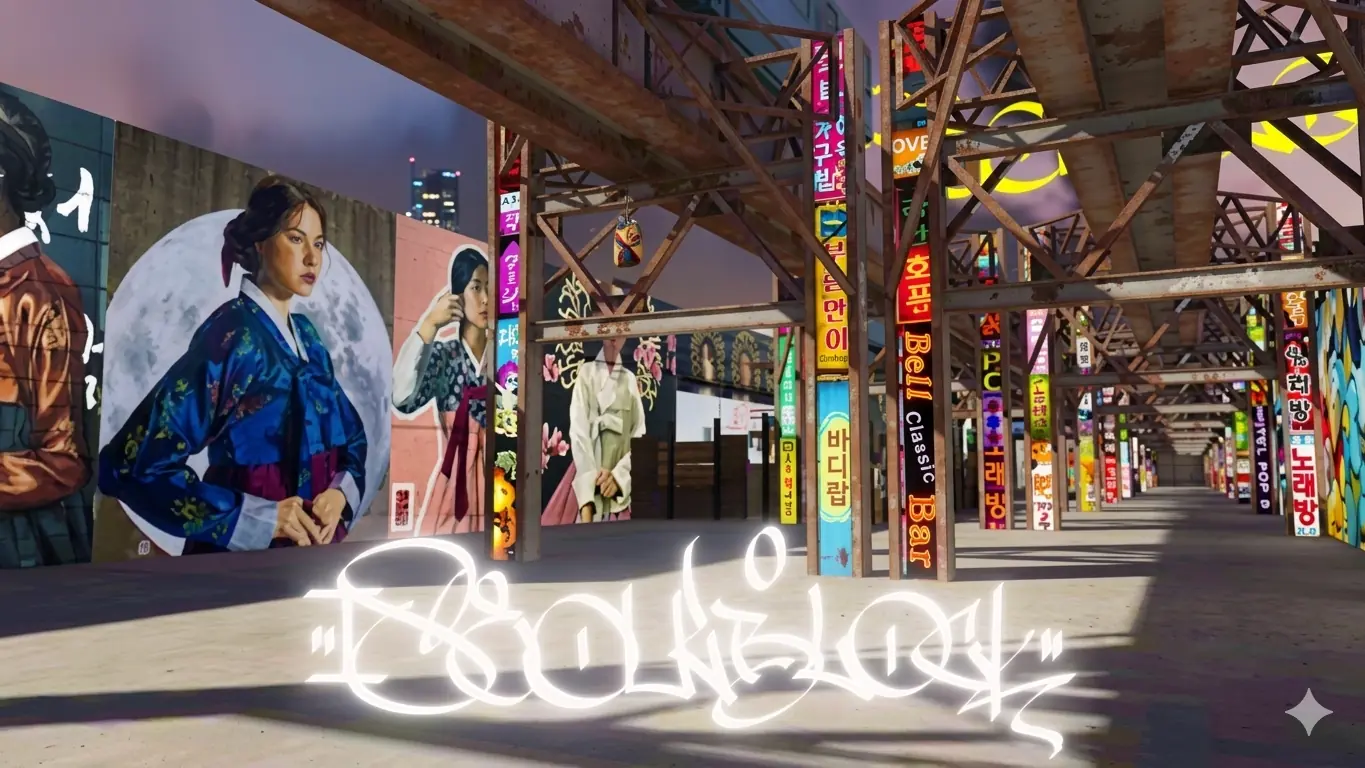
Spatial is sunsetting its creator platform. I've built worlds across Spatial, Horizon, and the long-dead Mozilla Hubs — and Jayhan's iSEOULBLOCK was a world worth walking through. This is what we lose when the servers go dark.
GitHub Year in Review
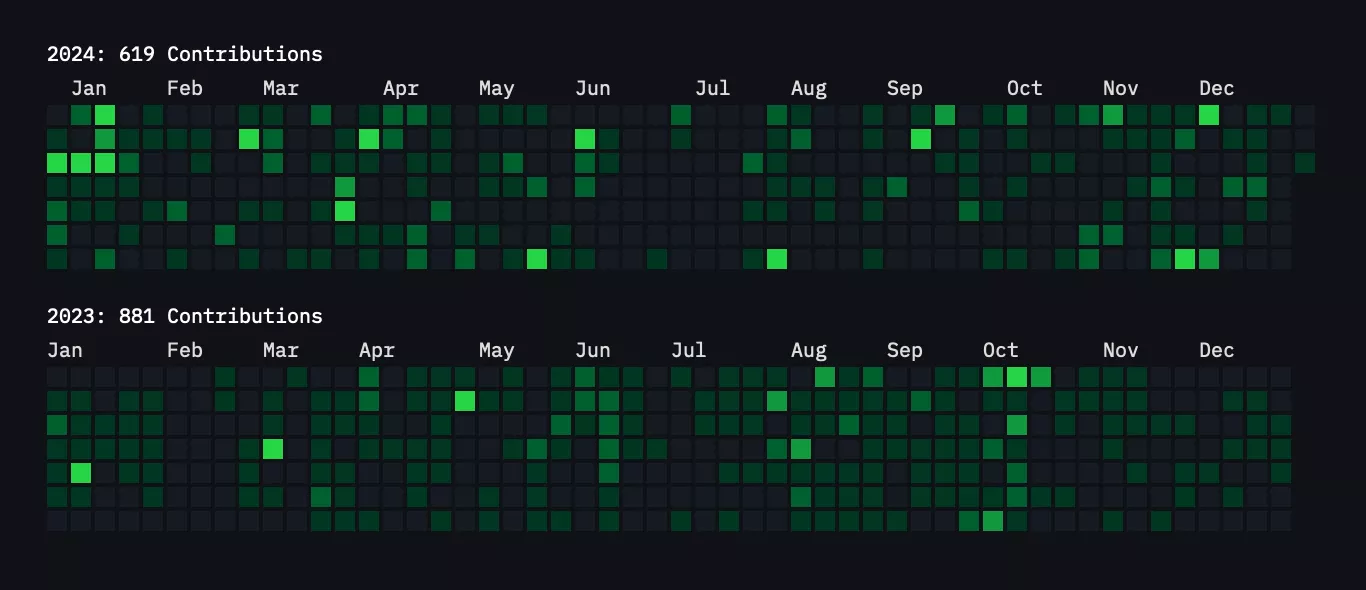
A look back at my GitHub activity in 2024, featuring 619 contributions across various projects and initiatives.
OpenAI 4o Image Gen is Superior to All Others (*)
Except when their lawyers restrict what the technology can actually do. Other than that, it's AMAZING and the leader in the clubhouse.