
Meeting Elvis Costello and Erick Sermon
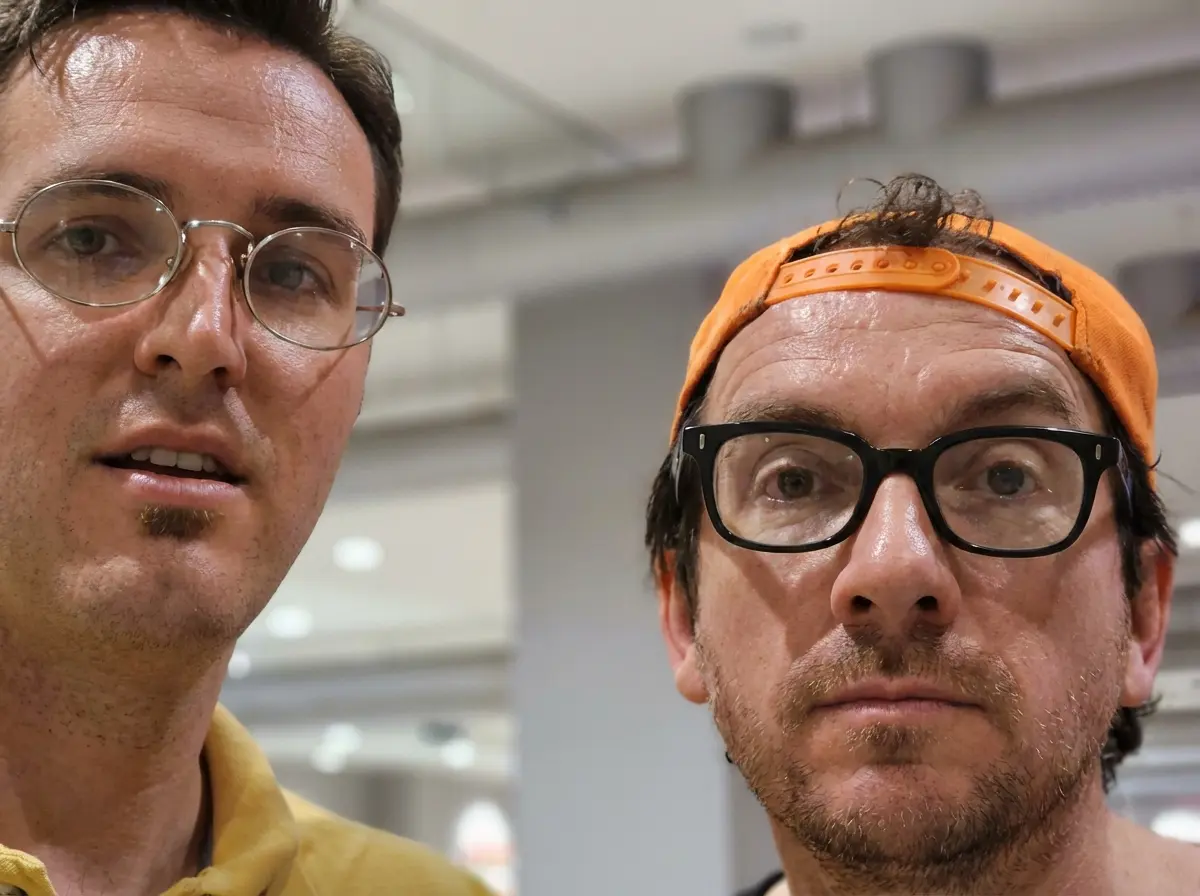
Meeting Elvis Costello and Erick Sermon
JANUARY 10, 2026
1996 was a different era. Digital cameras were barely a thing, and the ones that existed were curiosities more than tools. I happened to own one of those curiosities—the Casio QV-10—and on a trip to Japan that year, I had two unexpected encounters that I've carried with me ever since.
LAX: Meeting Erick Sermon
My first encounter happened at Los Angeles International Airport while waiting for my flight to Japan. I spotted Erick Sermon—one half of the legendary hip-hop duo EPMD and a producer whose beats had shaped the sound of East Coast rap.
I worked up the nerve to approach him. He was kind, gracious with his time, and agreed to a photo. The interaction was brief but memorable. What wasn't memorable—in a good way—was the photo itself.

AI-enhanced version - still challenging
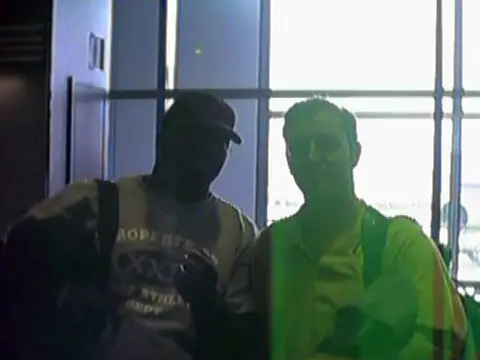
Original 320x240 photo - horribly backlit
Osaka: Elvis Costello in the Customs Line
The second encounter happened on the other side of the Pacific, in the customs line at Osaka airport. Standing ahead of me was Elvis Costello.
Elvis Costello in 1996 had just released "All This Useless Beauty" and was touring with The Attractions—their final tour together, as it turned out. The band was falling apart, with tensions between Costello and bassist Bruce Thomas reaching a breaking point. Their last US show had been in Seattle that September before wrapping up with final performances in Japan. I was witnessing the tail end of an era in rock history, standing in a customs line.
He was fascinated by my camera. The Casio QV-10 was brand new to the market, and he'd never seen anything like it. The fact that you could see the photo on a screen immediately after taking it—that was genuinely novel in 1996. He mentioned he'd never taken a digital photo like that before.
There's something special about that moment. Here was one of the most important songwriters of his generation, someone who'd been shaping music since the punk era, genuinely intrigued by this little gadget I was carrying. For a brief moment, I had something that impressed Elvis Costello.
AI-enhanced version - turned out great

Original 320x240 photo from Osaka customs
The Camera That Started It All
The Casio QV-10 was revolutionary. Released in 1995, it was the first consumer digital camera with a built-in LCD screen. Before this, digital cameras were essentially blind—you took a photo and hoped for the best. The QV-10 changed everything. It had a 1.8-inch TFT LCD that let you see what you were shooting in real-time.
Even more innovative was its swivel lens. The camera body could rotate 270 degrees relative to the lens, meaning you could flip the screen toward yourself and take a selfie while actually seeing yourself on screen. In 1996, this was mind-blowing. It was literally the first time anyone could do that with a digital camera.
The trade-off? Resolution. The QV-10 captured images at 320x240 pixels—about 0.07 megapixels. To put that in perspective, the phone in your pocket right now probably shoots at 12 megapixels or more. My revolutionary camera captured images that would be a tiny thumbnail on today's screens.
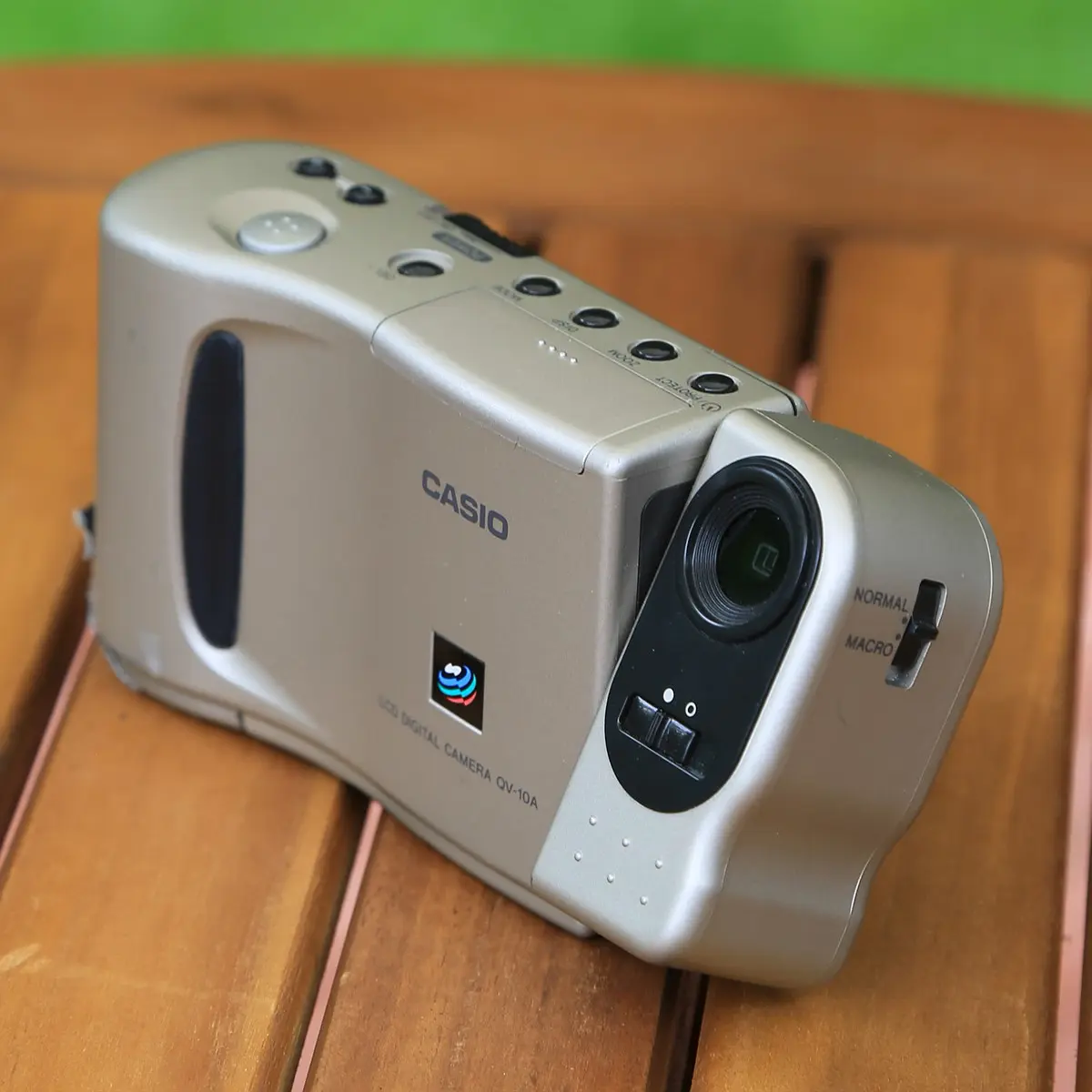
The Casio QV-10—the little camera that started a revolution.
Commander Mark Rules
Famous designer Frank Chimero tweeted a few months ago that he was a fan of Commander Mark growing up. I responded to let him know that Commander Mark still lives(yes!) and his library of drawing videos lives on YouTube and he even streams on Twitch. Commander Mark rules.
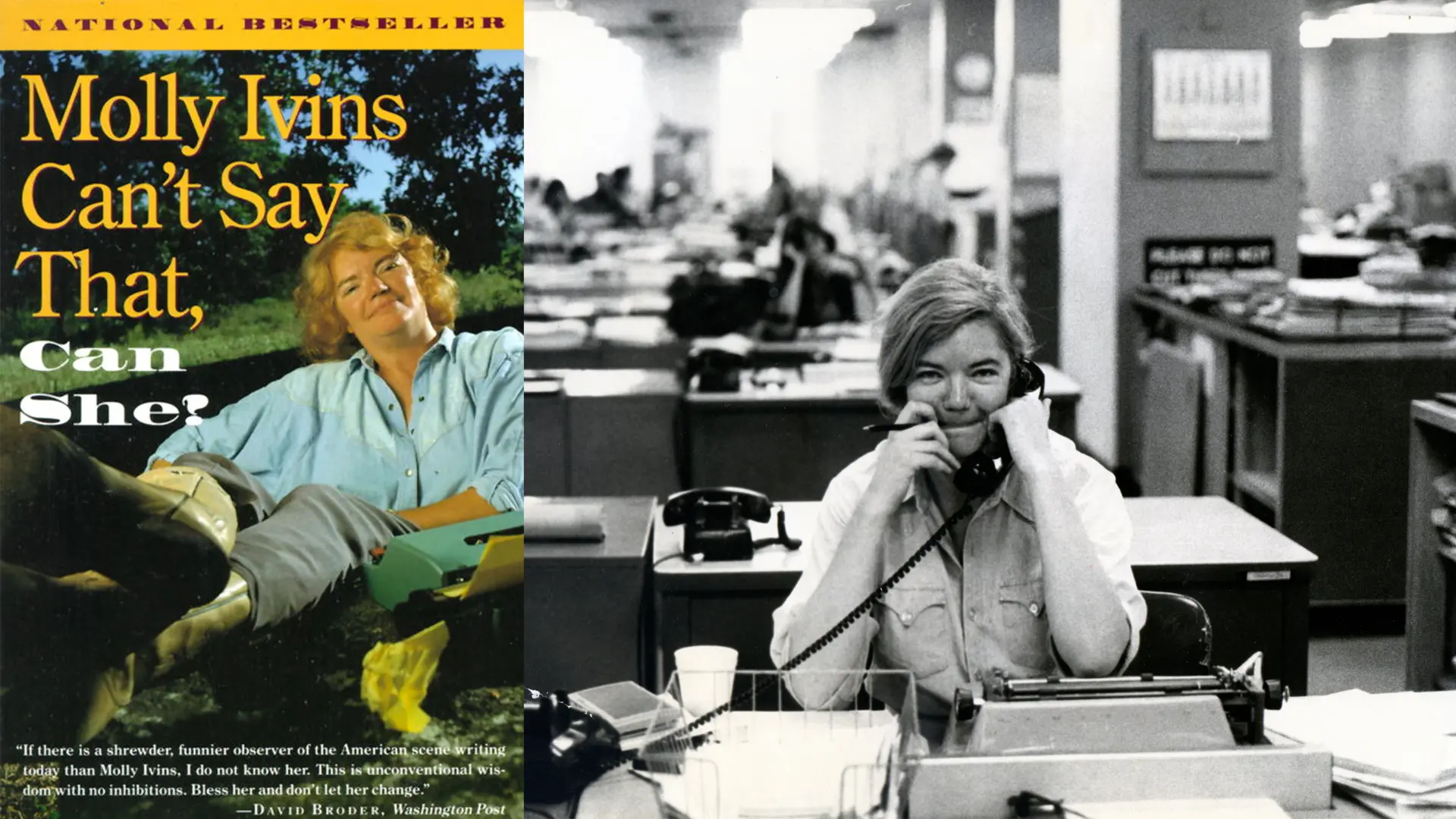
My Afternoon with Molly Ivins
About 30 years ago I had an amazing opportunity to spend a few hours talking with Molly Ivins as she came through El Paso to promote her book. I used to work at a book store and would help out as authors set up their wares and managed the crowds.
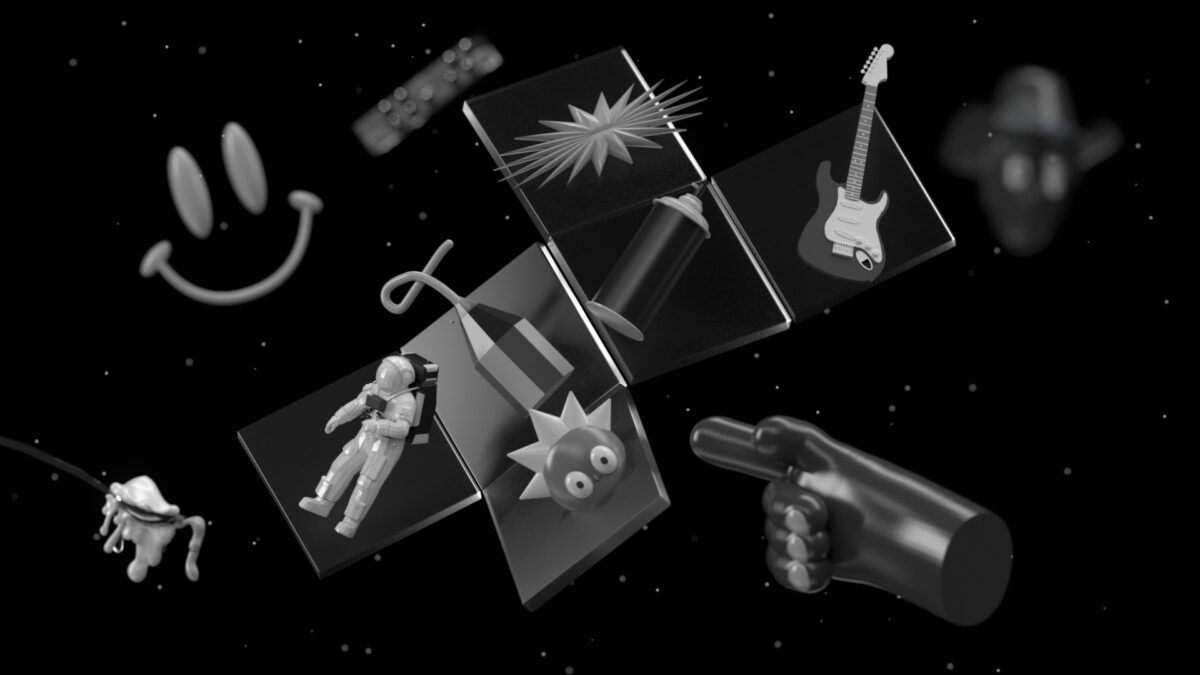
30 Weeks of Livestreaming
One of my favorite activities as being CTO of Darkblock was my livestream interactions with developers and creators.

Ship Week: Two Fresh AI Launches
It's Ship Week — launching Candidate-in-a-Box and Kōchi v1.5. Building, shipping, iterating. Every week.
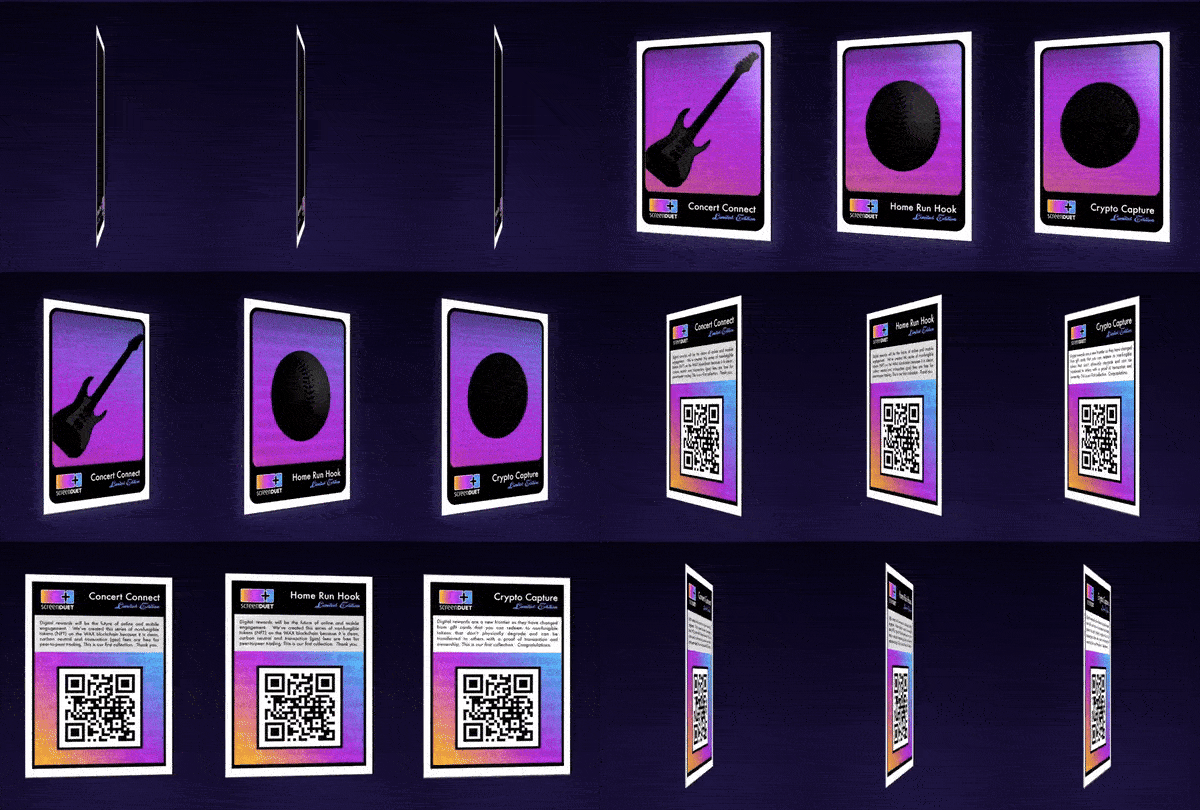
ScreenDuet Promo NFT
The future of marketing and loyalty rewards will be completely digital. In the past people would do anything for a free tshirt, and now they do it for a differentiator for their online presense.